Category: Uncategorized

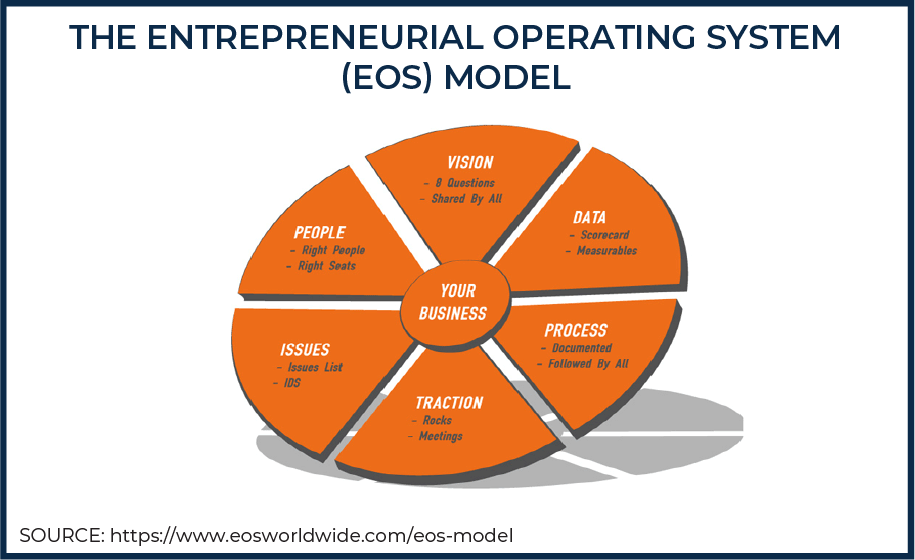
  • When EOS Is Implemented But Not Actually Working

    When EOS Is Implemented But Not Actually Working

    One of the most common conversations I have with founders begins with some version of:

    “We have implemented EOS, but we’re not getting the results we expected.”

    The leadership team is holding L10 meetings. Rocks have been established. Scorecards exist. Accountability charts are in place. Quarterly planning sessions happen consistently.

    On paper, everything appears to be working.

    Yet execution remains inconsistent. The same issues continue to surface. Rocks get pushed into the next quarter. Accountability feels weak. Leaders attend meetings but leave without meaningful progress. The founder is still involved in too many decisions and too much of the accountability.

    At this point, many founders begin questioning EOS.

    In my experience, EOS is rarely the problem.

    More often, the organization has installed the tools without fully embracing the leadership discipline required to make the tools effective.

    EOS Is A Framework, Not A Solution

    One of the biggest misconceptions about EOS is that implementing the tools will automatically improve execution.

    EOS provides a framework for:

    • Creating focus
    • Establishing accountability
    • Solving issues
    • Aligning leadership teams
    • Creating operating discipline

    What EOS does not do is make leaders accountable.

    It does not force difficult conversations. It does not solve issues. It does not make decisions. It does not hold people accountable for commitments.

    The leadership team still has to do those things.

    The framework creates the opportunity for traction. The leadership team creates the traction.

    That distinction is important because many organizations become frustrated when they install EOS but fail to see meaningful changes in performance. The tools are visible. The behaviors remain unchanged.

    Common Signs EOS Is Not Working

    Most founders know when EOS is not producing the results they expected.

    The symptoms are often easy to recognize:

    • L10 meetings feel like status updates.
    • The same issues appear week after week.
    • Rocks are consistently carried into the next quarter.
    • To-Dos are frequently missed.
    • Scorecards are reviewed but rarely drive decisions.
    • Leaders avoid difficult conversations.
    • Accountability feels inconsistent across the leadership team.
    • Progress still depends heavily on founder involvement.

    None of these issues are caused by EOS.

    They are indicators that the organization is using the tools without fully adopting the discipline behind them.

    The Difference Between Using EOS And Living EOS

    Many businesses use EOS.

    Far fewer businesses truly operate on EOS.

    The difference is significant.

    Organizations that are simply using EOS often focus on the mechanics:

    • Running meetings
    • Updating scorecards
    • Setting Rocks
    • Maintaining accountability charts

    Organizations that are living EOS focus on the behaviors that make the tools effective:

    • Solving issues at the root cause level
    • Making decisions quickly
    • Holding one another accountable
    • Following through on commitments
    • Maintaining focus on priorities
    • Addressing difficult conversations directly

    The tools support the behaviors.

    The tools are not a substitute for the behaviors.

    This is where many leadership teams get stuck. They assume the framework itself will create accountability when accountability is actually a leadership responsibility.

    Why The Same Issues Keep Coming Back

    One of the clearest signs that EOS is not working as intended is repetition.

    Founders often describe it as feeling stuck in the same conversations quarter after quarter. Customer issues continue to surface. Communication challenges remain unresolved. Accountability concerns never seem to disappear. The leadership team discusses the same frustrations repeatedly, yet very little actually changes.

    This usually happens because leadership teams spend time identifying issues without fully solving them.

    The conversation often follows a familiar pattern:

    • An issue is raised.
    • Team members share their perspectives.
    • Possible causes are discussed.
    • Everyone agrees the issue is important.
    • The meeting moves on.

    The problem remains.

    Over time, organizations become very good at talking about issues and very poor at resolving them.

    One of the most valuable lessons EOS teaches is that identifying an issue is not the same as solving it. Awareness creates visibility, but visibility alone does not create traction.

    When issues continue resurfacing, it is often because the leadership team has not fully addressed the root cause. Instead, they are responding to symptoms.

    For example:

    • A communication problem may actually be an accountability problem.
    • An accountability problem may actually be a role clarity problem.
    • A role clarity problem may actually be a leadership capability problem.
    • A missed Rock may actually be a prioritization problem.

    If the team only addresses what is visible on the surface, the issue continues to return in different forms.

    Strong leadership teams are willing to slow down long enough to identify the real issue, make a decision, assign ownership, and hold one another accountable for follow-through.

    The purpose of IDS is not to discuss issues.

    The purpose of IDS is to eliminate them.

    The Hidden Cost Of EOS Lite

    Many businesses operate in what I call “EOS Lite.”

    The tools exist, but the discipline does not.

    Meetings happen, but difficult issues are avoided. Scorecards exist, but nobody acts on the data. Rocks are established, but accountability remains inconsistent. To-Dos are assigned, but commitments are missed without consequence.

    The organization receives some value from EOS, but never experiences the full benefit.

    This creates a false sense of progress.

    The leadership team believes it is operating on EOS because the tools are visible. Meanwhile, the behaviors that actually create traction remain unchanged.

    The result is frustration:

    • Founders begin questioning the framework.
    • Leaders lose confidence in the process.
    • Execution remains inconsistent.
    • Progress slows.
    • Founder dependency increases.

    The business continues working harder than it should for the results it achieves.

    A Simple EOS Health Check

    If you are wondering whether EOS is working as intended, ask yourself the following questions:

    • Are Rocks consistently completed each quarter?
    • Are To-Dos completed every week?
    • Are issues being solved rather than repeatedly discussed?
    • Are scorecards driving decisions and accountability?
    • Do leaders hold one another accountable without founder intervention?
    • Is the leadership team aligned around the same priorities?
    • Has execution improved since implementing EOS?

    If several of these questions create discomfort, the issue is unlikely to be EOS itself.

    More often, it is a leadership discipline problem.

    What Strong EOS Execution Looks Like

    When EOS is working properly, the impact becomes visible throughout the organization.

    Leadership teams:

    • Solve issues quickly.
    • Make decisions faster.
    • Maintain focus on priorities.
    • Hold one another accountable.
    • Complete commitments consistently.
    • Address problems before they become crises.
    • Operate with greater clarity and alignment.

    Most importantly, the founder begins to experience leverage.

    The business no longer relies on constant founder involvement to maintain momentum. The leadership team owns execution. Leaders make decisions. Accountability becomes part of the operating rhythm rather than something driven by the founder.

    The founder can focus on vision, strategy, and the future of the business.

    That is where EOS creates its greatest value.

    Final Thought

    EOS is a powerful framework.

    But frameworks do not create results.

    People do.

    The organizations that achieve the greatest success with EOS are not the ones with the best scorecards, the most polished accountability charts, or the most organized meeting notes.

    They are the organizations willing to embrace the discipline, accountability, and leadership behaviors required to make the framework work.

    Because EOS does not create traction.

    Leadership discipline creates traction.

    EOS simply provides the structure to support it.

  • The Founder Bottleneck Costs More Than You Think

    The Founder Bottleneck Costs More Than You Think

    Most founders do not set out to become the bottleneck in their business.

    In fact, most founders want the opposite. They want capable leaders who can make decisions, solve problems, and drive results without needing constant involvement. They want a business that can continue moving forward whether they are in the room or not.

    Yet as companies grow, many founders find themselves carrying more responsibility than ever before.

    The business is larger. There are more employees, more managers, and more customers. Revenue has increased. New systems have been implemented. Leadership roles have been added.

    Despite all of that, important decisions still seem to find their way back to the founder.

    Projects stall waiting for approval.

    Leaders bring problems but not solutions.

    Accountability improves when the founder is present and weakens when they are not.

    The founder begins to wonder:

    • Why does everything still depend on me?
    • Why aren’t my leaders stepping up?
    • Why am I working harder today than I was three years ago?

    These are often signs that founder dependency has become a constraint to growth.

    How Founder Dependency Develops

    Founder dependency rarely appears overnight.

    Most businesses develop it gradually as they grow.

    In the early stages, founder involvement is both necessary and valuable. Decisions need to be made quickly. Resources are limited. Teams are small. The founder typically has the most knowledge, context, and experience.

    The business benefits from that direct involvement.

    The challenge is that many organizations never evolve beyond that stage.

    As the company grows, the founder continues solving problems, making decisions, setting priorities, and driving accountability. The organization learns that when something important happens, the founder will eventually step in.

    Over time, this creates a cycle.

    Leaders become accustomed to escalating issues.

    Employees wait for direction.

    Departments become dependent on founder involvement.

    The founder becomes the operating system of the business.

    What once helped the business grow eventually becomes the thing limiting further growth.

    Why Leaders Don’t Step Up

    One of the most common assumptions founders make is that they simply have the wrong leaders.

    Sometimes that is true.

    More often, leaders are operating within a system that makes ownership difficult.

    Many organizations have never clearly defined:

    • Decision-making authority
    • Accountability expectations
    • Role ownership
    • Escalation paths
    • Leadership standards

    As a result, leaders hesitate.

    They wait for approval.

    They avoid making difficult decisions.

    They bring problems upward rather than solving them themselves.

    This creates frustration on both sides.

    The founder feels unsupported.

    The leadership team feels constrained.

    Neither side fully understands why the pattern keeps repeating.

    The issue is often not capability.

    The issue is that the business has not created the conditions required for leaders to lead.

    The Hidden Cost Of Being The Bottleneck

    Many founders underestimate the true cost of founder dependency because the impact rarely appears on a financial statement.

    Instead, it shows up throughout the organization.

    Common symptoms include:

    • Slower decision-making
    • Delayed projects
    • Missed opportunities
    • Leadership frustration
    • Increased turnover
    • Inconsistent accountability
    • Founder burnout

    The longer founder dependency remains in place, the more expensive it becomes.

    Many founders recognize the problem but delay addressing it.

    They tell themselves:

    • “We’ll fix it after this quarter.”
    • “We just need a few more people.”
    • “We can’t afford additional leadership support right now.”
    • “I’ll deal with it once things settle down.”

    Unfortunately, things rarely settle down.

    While the business waits, the founder continues carrying the weight. Leaders continue waiting for decisions. Problems continue escalating. Execution continues slowing.

    The organization develops workarounds instead of solving root causes.

    What often goes unnoticed is that the cost of waiting becomes significantly larger than the investment required to strengthen the foundation.

    Businesses can spend years avoiding investments in leadership development, operational discipline, or experienced operational support while losing far more through:

    • Delayed decisions
    • Missed growth opportunities
    • Leadership turnover
    • Reduced accountability
    • Founder exhaustion

    The business continues operating, but not at its full potential.

    How To Know If Founder Dependency Is Holding You Back

    Ask yourself the following questions:

    • Can the business operate effectively for two weeks without me?
    • Do leaders consistently make decisions without waiting for my approval?
    • Do projects continue moving forward when I am unavailable?
    • Are problems being solved by the people closest to them?
    • Does accountability remain strong when I am not involved?
    • Would my leadership team describe ownership and accountability the same way I would?

    If several of these questions create discomfort, founder dependency may be limiting growth more than you realize.

    What A Healthy Leadership Team Looks Like

    A healthy leadership team does not eliminate the need for a founder.

    It changes the role of the founder.

    Instead of serving as the primary problem-solver, decision-maker, and accountability driver, the founder focuses on:

    • Vision
    • Strategy
    • Culture
    • Relationships
    • Long-term priorities

    The leadership team takes ownership of:

    • Execution
    • Decision-making
    • Problem-solving
    • Accountability
    • Cross-functional coordination

    This creates a business that can continue to grow without depending on founder heroics to keep everything moving.

    The founder gains leverage.

    Leaders gain ownership.

    The organization becomes stronger.

    Final Thought

    Most founder bottlenecks are not created by poor intentions.

    They are created by growth.

    The business reaches a point where the founder can no longer personally compensate for every leadership gap, decision-making challenge, or accountability issue.

    What once helped the business succeed becomes the very thing holding it back.

    The businesses that scale successfully are not the businesses where founders work harder.

    They are the businesses that intentionally build leadership capability, strengthen accountability, and create a foundation that no longer depends on one person carrying the weight of the organization.

    Because growth becomes much easier when the founder is no longer the operating system of the business.

  • Why Leadership Teams Stay Busy But Fail To Execute

    Why Leadership Teams Stay Busy But Fail To Execute

    Many founder-led businesses reach a point where activity is no longer the problem.

    The leadership team is working hard. Meetings happen regularly. Metrics are reviewed. Quarterly priorities are established. Leaders are putting in the hours and genuinely care about the success of the business.

    Yet despite all of this effort, progress often feels slower than it should.

    Projects take longer than expected. Priorities get pushed into the next quarter. The same issues continue to appear in leadership meetings. Leaders leave discussions feeling productive, but the business struggles to gain meaningful traction.

    When this happens, many founders assume they have a strategy problem.

    More often, they have an execution problem.

    The challenge is not a lack of effort or intelligence. The challenge is that the leadership team has become highly effective at discussing work without consistently turning those discussions into decisions, accountability, and results.

    Why Activity Is Often Mistaken For Progress

    As businesses grow, leadership teams naturally spend more time communicating and coordinating. Departments become interconnected. Decisions affect more people. Leaders require greater visibility into what is happening across the organization.

    This creates a natural temptation to spend more time sharing updates, reviewing information, and discussing challenges.

    Unfortunately, many leadership teams gradually drift into a cycle where meetings become focused on information rather than action.

    A typical meeting might include:

    • Department updates
    • Project status reviews
    • Performance metrics
    • Customer concerns
    • Operational challenges

    None of these discussions are inherently problematic.

    The issue arises when meetings end without clear decisions, ownership, accountability, or resolution.

    Leaders leave feeling informed.

    The business leaves unchanged.

    Over time, organizations begin confusing communication with execution.

    Why The Same Issues Keep Returning

    One of the strongest indicators of an execution problem is repetition.

    Founders often describe the experience as feeling stuck in the same conversation quarter after quarter.

    The leadership team discusses accountability. A few weeks later, the issue returns.

    The team discusses communication. A few weeks later, the issue returns.

    The team discusses project delays. A few weeks later, the issue returns.

    The problem is not that leaders are unaware of the issues.

    The problem is that awareness alone does not create change.

    Many organizations spend significant time identifying symptoms without solving root causes. They discuss what happened, who was impacted, and why it is frustrating. What they often fail to do is make a clear decision, assign ownership, establish accountability, and follow through.

    As a result, issues remain unresolved and continue resurfacing.

    The Hidden Cost Of Poor Execution

    Execution problems rarely appear as a line item on a financial statement.

    Instead, they quietly affect nearly every area of the business.

    Over time, poor execution creates:

    • Slower decision-making
    • Delayed projects
    • Missed growth opportunities
    • Leadership frustration
    • Reduced accountability
    • Employee disengagement
    • Increased founder involvement

    This last point is particularly important.

    As execution weakens, founders often compensate by becoming more involved. They follow up on commitments, resolve conflicts, clarify priorities, and push projects forward.

    The business continues functioning, but only because the founder is carrying responsibilities that should be owned by the leadership team.

    Execution problems often become founder dependency problems.

    A Simple Leadership Team Test

    Think about the last four leadership meetings.

    Ask yourself:

    • Did we solve issues or simply discuss them?
    • Were clear decisions made?
    • Was ownership assigned?
    • Were deadlines established?
    • Did leaders follow through on their commitments?
    • Did the same issues appear again the following week?

    The answers are often revealing.

    Many leadership teams discover they spend far more time discussing problems than solving them.

    What Strong Execution Actually Looks Like

    Strong execution does not require more meetings, more reports, or more process.

    It requires discipline.

    High-performing leadership teams share several characteristics:

    • Priorities are clear.
    • Ownership is understood.
    • Decisions are made quickly.
    • Accountability is consistent.
    • Issues are addressed at the root cause level.
    • Commitments are followed through.

    Most importantly, leaders understand that meetings are not intended to report on work. Meetings exist to make decisions, solve problems, and remove obstacles to execution.

    The focus shifts from activity to outcomes.

    Final Thought

    Many businesses believe they need a new strategy when what they actually need is stronger execution.

    The vision is clear.

    The opportunity exists.

    The talent is often already in the room.

    What is missing is the discipline required to consistently turn priorities into results.

    Leadership teams do not create momentum by talking about work. They create momentum by making decisions, solving issues, and holding one another accountable for outcomes.

    Because activity creates the feeling of progress. Execution creates actual progress.

  • If Everything Is Important, Nothing Moves Forward

    If Everything Is Important, Nothing Moves Forward

    One of the most common frustrations founders share is that the business feels busy but not productive.

    Everyone appears to be working hard. Meetings are happening. Projects are underway. New ideas are constantly being discussed. Yet when the quarter ends, the most important priorities often remain unfinished.

    The problem is rarely a lack of effort.

    More often, it is a lack of focus.

    As businesses grow, opportunities multiply. New customers create new demands. Leaders bring forward new ideas. Departments advocate for their own priorities. Urgent issues compete with important initiatives. Without discipline, everything starts to feel important.

    When that happens, the organization loses the ability to focus on what matters most.

    How Businesses Drift Into Priority Overload

    Most organizations do not intentionally create too many priorities.

    It happens gradually.

    A customer requests a new service. A system upgrade becomes necessary. A hiring initiative is launched. A process improvement project gets approved. A new growth opportunity emerges.

    Each initiative may be worthwhile on its own.

    The problem is that very few leadership teams stop to ask whether they have the capacity to execute all of them well.

    As priorities accumulate, the organization begins spreading its attention, resources, and leadership capacity across too many initiatives. Leaders become increasingly busy, but progress becomes increasingly difficult.

    The business starts more than it finishes.

    The leadership team confuses movement with momentum.

    The Cost Of Too Many Priorities

    Many leadership teams mistakenly believe that pursuing more priorities will create more progress.

    In reality, the opposite is often true.

    When too many initiatives compete for attention, predictable problems begin to emerge:

    • Teams become stretched across multiple projects.
    • Resources become fragmented.
    • Accountability becomes less clear.
    • Deadlines begin to slip.
    • Important work gets delayed by urgent work.
    • Leaders spend more time coordinating priorities than executing them.
    • Employees lose clarity around what matters most.

    The organization appears active, but meaningful progress becomes harder to achieve.

    This is one of the reasons many leadership teams feel like they are constantly running but never quite arriving.

    Why Founders Struggle To Let Go Of Priorities

    For founders, this challenge is often compounded by opportunity.

    Entrepreneurs are naturally wired to see possibilities. They identify new markets, recognize customer needs, spot operational improvements, and generate new ideas. This ability to see opportunity is often one of the reasons the business grew in the first place.

    The challenge is that growth changes the role of leadership.

    As organizations become larger and more complex, success becomes less about generating ideas and more about deciding which ideas deserve the organization’s time, attention, and resources.

    Every new initiative carries a cost:

    • Time
    • Money
    • Leadership attention
    • Team capacity
    • Organizational focus

    The question is no longer:

    “What could we do?”

    The question becomes:

    “What should we do right now?”

    That distinction is where many businesses struggle.

    The Hidden Cost Of Lack Of Focus

    Most businesses do not miss their goals because they lack talented people.

    They miss their goals because their attention is spread too thin.

    When leadership teams try to pursue too many priorities simultaneously, the cost shows up in ways that are often difficult to measure:

    • Strategic initiatives take longer than expected.
    • Quarterly goals are repeatedly pushed forward.
    • Leaders become overwhelmed.
    • Employees lose clarity around what matters most.
    • Resources are allocated to projects that never create meaningful results.
    • The organization becomes reactive instead of intentional.

    Over time, the business develops a dangerous habit.

    Everything feels important.

    As a result, nothing receives the focus required to produce exceptional results.

    The leadership team becomes busy managing activity rather than driving outcomes.

    The business continues moving, but progress becomes increasingly difficult to achieve.

    Why Execution Often Looks Like A Priority Problem

    Many founders believe they have an execution problem.

    In reality, they often have a prioritization problem.

    Execution becomes difficult when teams are asked to pursue too many objectives simultaneously. People become overwhelmed. Leaders lose clarity. Resources become diluted. The organization spends more time managing priorities than achieving them.

    No amount of accountability can fully compensate for a lack of focus.

    Before execution improves, priorities must become clearer.

    A Simple Test

    Ask each member of your leadership team to independently answer the following question:

    “What are the three most important priorities for the business over the next 90 days?”

    If the answers are significantly different, you do not have an execution problem.

    You have an alignment problem.

    And alignment problems eventually become execution problems.

    How To Know If Focus Is Becoming A Problem

    Ask yourself the following questions:

    • Can every member of the leadership team clearly identify the top 3-5 priorities for the quarter?
    • Are new priorities regularly added before existing priorities are completed?
    • Do projects frequently start but fail to finish?
    • Does each department believe its priorities are more important than everyone else’s?
    • Are leaders constantly shifting attention between competing initiatives?
    • Do quarterly goals consistently get pushed into the next quarter?
    • Does the organization struggle to say no to new opportunities?

    If several of these questions resonate, the issue may not be execution.

    It may be that the organization is simply trying to accomplish too many things at once.

    What High-Performing Leadership Teams Do Differently

    The strongest leadership teams are not necessarily doing more.

    They are doing less with greater discipline.

    They understand that every priority carries an opportunity cost. They are willing to make difficult trade-offs. They recognize that focus is not about choosing what to do. It is about choosing what not to do.

    High-performing leadership teams typically:

    • Align around a small number of meaningful priorities.
    • Create clarity around ownership and accountability.
    • Protect their teams from unnecessary distractions.
    • Evaluate new opportunities against existing commitments.
    • Review progress consistently throughout the quarter.

    Most importantly, they create alignment around what matters most.

    This allows the organization to focus its energy, resources, and attention where it will create the greatest impact.

    Final Thought

    One of the most important responsibilities of leadership is deciding what not to do.

    Growth creates more opportunities, more demands, and more competing priorities. Without discipline, organizations become overwhelmed by all of them.

    The businesses that scale successfully are not the ones chasing the most opportunities.

    They are the ones that consistently align their people, resources, and attention around the priorities that matter most.

    Because when everything is important, nothing moves forward.

  • The Business Has Grown. The Foundation Hasn’t.

    The Business Has Grown. The Foundation Hasn’t.

    Most founders don’t come to the conclusion that something is wrong overnight. The realization usually happens gradually.

    The business is growing. Revenue is increasing. The team is larger than it was a few years ago. New leaders have been hired. New systems have been implemented. The company appears successful from the outside.

    Yet somehow everything feels harder than it should.

    The founder is still involved in too many decisions. Important issues continue to find their way back to them. Progress requires more effort than expected. The leadership team is working hard, but execution feels inconsistent. New solutions seem to create new problems.

    At this point, most founders begin searching for answers.

    They wonder if they have the wrong people.

    They question the organizational structure.

    They invest in new systems and tools.

    Sometimes they replace members of the leadership team.

    While those actions may address specific symptoms, they often fail to solve the underlying problem.

    The business has grown, but the foundation supporting it has not evolved at the same pace.

    Why Does Everything Still Depend On Me?

    One of the most common frustrations founders express is that the business still depends heavily on them despite years of growth.

    This is rarely because founders want to remain involved in everything.

    More often, the organization has become accustomed to relying on them.

    Founders solve problems quickly. They make decisions when others hesitate. They step into difficult conversations. They provide clarity when priorities become unclear. Over time, the business learns that when something important happens, the founder will eventually step in.

    That approach can work when the company is smaller.

    As the business grows, it becomes increasingly difficult to sustain.

    The founder becomes the decision-maker, the problem-solver, the escalation point, and the source of accountability. Instead of creating leverage, growth creates additional pressure because the organization continues to rely on one person to compensate for gaps elsewhere.

    Why Aren’t My Leaders Stepping Up?

    This question often leads founders to believe they have the wrong people.

    Sometimes they do.

    More often, the issue is more complex.

    Many leadership teams have never been taught how to operate as leaders. Strong individual contributors are promoted because they perform well in their functional roles, but leadership requires a different skill set. It requires decision-making, accountability, communication, conflict resolution, and the ability to think beyond a single department.

    In addition, many organizations unintentionally create dependence on the founder. Leaders become hesitant to make decisions because important decisions have historically flowed upward. Expectations become unclear. Accountability becomes inconsistent.

    As a result, leaders often wait for direction rather than taking ownership.

    The solution is not always replacing people.

    Sometimes the solution is strengthening leadership capability and creating an environment where leaders are expected, supported, and trusted to lead.

    Why Am I Working Harder With More People Than I Was Three Years Ago?

    This is one of the clearest signs that the foundation has not kept pace with growth.

    Many founders assume additional people will create additional capacity.

    In reality, more people create more complexity.

    Communication becomes more difficult. Decisions affect more stakeholders. Priorities become harder to align. Coordination becomes increasingly important.

    Without clear accountability, decision-making, and operating rhythms, every new hire can create more work for the founder instead of less.

    The founder ends up managing communication gaps, resolving conflicts, clarifying expectations, and making decisions that should be owned elsewhere in the organization.

    The business grows, but the founder’s workload grows with it.

    That is not a people problem.

    It is a foundation problem.

    Why Does Every Solution Create Another Problem?

    One of the most frustrating experiences for founders is feeling like every improvement exposes a new challenge.

    A new leader is hired, but performance doesn’t improve. A new system is implemented, but accountability remains inconsistent. The organization is restructured, but decisions continue to move slowly.

    The reason is simple.

    Most businesses address symptoms before they address the foundation.

    Hiring a leader will not solve unclear accountability. New software will not solve weak decision-making. A reorganization will not solve leadership capability gaps. The symptoms may change, but the underlying issue remains.

    Until the foundation improves, the business will continue producing new versions of the same problem.

    The Hidden Cost Of Waiting

    Most founders recognize these challenges long before they decide to address them.

    They know the business depends too heavily on them. They know execution is inconsistent. They know the leadership team is not operating at the level required for the next stage of growth.

    Yet many delay making meaningful changes.

    Part of the reason is understandable. Growth creates competing priorities and immediate demands. Investing in leadership development, operational discipline, or experienced support can feel expensive compared to the urgent issues demanding attention today.

    The problem is that delay has a cost.

    While the business waits, decisions continue to pile up. Opportunities are missed. Leaders become frustrated. The founder carries increasing levels of pressure and responsibility. The organization develops workarounds instead of solutions.

    Many businesses spend years trying to avoid investments that would strengthen the foundation of the company. During that time, they often lose far more through delayed decisions, slower execution, leadership turnover, missed opportunities, and founder burnout than they would have spent solving the problem.

    The cost of waiting is rarely visible on a financial statement.

    But it shows up everywhere else.

    What A Strong Foundation Looks Like

    A stronger foundation does not mean more bureaucracy.

    It means creating the structure necessary to support growth.

    Strong foundations are built on:

    • Leaders who can make decisions confidently

    • Clear ownership and accountability

    • Consistent operating rhythms

    • Focused priorities

    • Healthy leadership team dynamics

    • A shared understanding of what matters most

    When these elements are in place, growth becomes easier to manage because the organization no longer depends on founder heroics to function.

    Final Thought

    Most businesses do not struggle because they lack effort.

    They struggle because growth eventually exposes weaknesses that effort used to hide.

    For years, founders can compensate for those weaknesses through experience, intuition, hard work, and personal involvement. Eventually, however, the business reaches a point where founder effort is no longer enough.

    The next stage of growth requires a stronger foundation.

    Because growth does not solve operational weaknesses.

    It reveals them.